

Factory source Edible Alcohol Equipment - Waste water containing salt evaporation crystallization process – Jinta
Factory source Edible Alcohol Equipment - Waste water containing salt evaporation crystallization process – Jinta Detail:
Overview
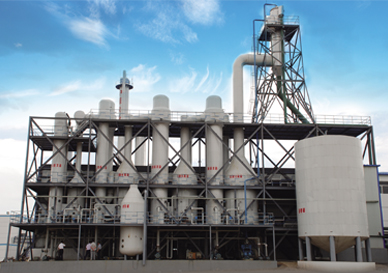
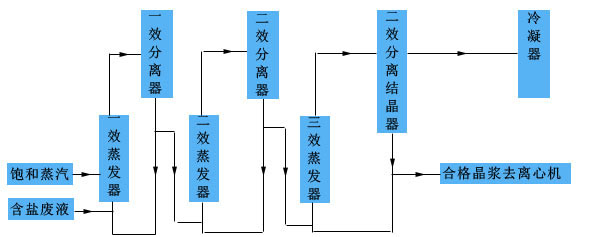
For the characteristics of “high salt content” of waste liquid produced in cellulose, salt chemical industry and coal chemical industry, the three-effect forced circulation evaporation system is used to concentrate and crystallize, and the supersaturated crystal slurry is sent to the separator to obtain crystal salt. After separation, the mother liquor returns to the system to continue. Circulating concentration.
The device is controlled by automatic program. Evaporation tons of wastewater consumes 0.3 to 0.35 tons of steam.
Second, the process flow chart:
Waste steam evaporation device using secondary steam treatment of dryer
1. Utility model patent number
Second, an overview
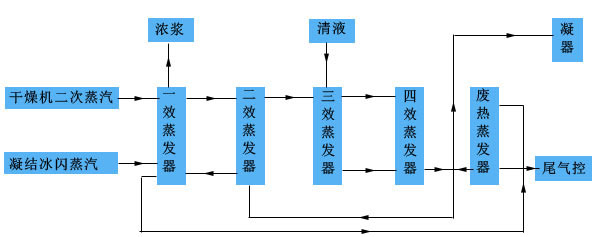
Adopting “four-effect, falling film, and pressure-reducing” evaporation system, the falling film evaporator adopts the patent technology of “three-level film”, using the secondary steam of steam dryer and steam condensed water as the heat source, and setting the waste heat evaporator to dry again. Machine waste steam, the waste clear liquid is concentrated and evaporated, the thick slurry is sent to the dryer, and the condensed water is evaporated to the water treatment plant.
The device is controlled by automatic program. The evaporation system does not need to replenish steam once.
Third, the process flow chart:
DDGS complete set
First, the patent number
National invention patent
Second, an overview
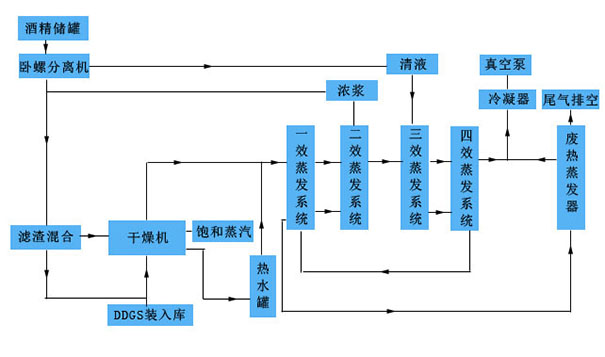
The distillers grains are produced by a full drying process, that is, dried distillers grains containing soluble solids are called DDGS (Distillers Dried Grains with Solubles).
The device uses mechanical separation, steam drying, waste heat evaporation and weighing and packaging four units to turn waste materials that are seriously polluting the environment into treasures, and obtain high-protein feeds that are easy to store, easy to transport, and nutritious. It solves the environmental problems that restrict the development of enterprises, and at the same time brings considerable economic benefits. The device is controlled by automatic program.
Third, the process flow chart
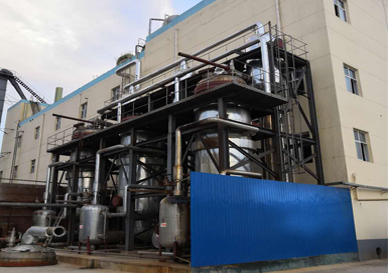
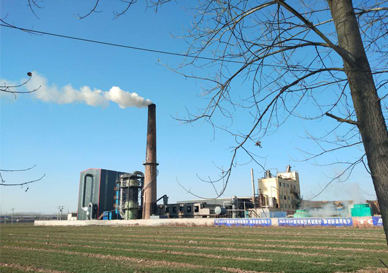
Product detail pictures:
Related Product Guide:
Dedicated to strict quality control and thoughtful customer service, our experienced staff members are always available to discuss your requirements and ensure full customer satisfaction for Factory source Edible Alcohol Equipment - Waste water containing salt evaporation crystallization process – Jinta , The product will supply to all over the world, such as: Peru, Gabon, Jordan, With the enterprising spirit of" high efficiency, convenience, practicality and innovation", and in line with such serving guidance of "good quality but better price, " and "global credit", we've been striving to cooperate with the automobile parts companies all over the world to make a win-win partnership.
 By tobin from Australia - 2018.09.08 17:09
The sales person is professional and responsible, warm and polite, we had a pleasant conversation and no language barriers on communication.
By Martina from Nicaragua - 2017.09.22 11:32
Related products
-
factory customized Packing Column - Dealing wi...
National invention patent The characteristics and treatment method of furfural wastewater: It has strong acidity. The bottom wastewater contains 1.2%~2.5% acetic acid, which is turbid, khaki, light transmittance <60%. In addition to water and acetic acid, it also contains extremely A small amount of furfural, other trace organic acids, ketones, etc. The COD in the wastewater is about 15000~20000mg/L, BOD is about 5000mg/L, SS is about 250mg/L, and the temperature is about 100℃. If the was...
-
Short Lead Time for Ethanol Plant Manufacturers...
Summary The containing Pentosan plant fiber materials (like Corn cob, peanut shells, cotton seed hulls, rice hulls, sawdust, cotton wood) will hydrolysis into pentose in the fluence of the certain temperature and catalyst, Pentoses leave off three water molecules to form furfural The corn cob is used by the materials usually, and after a series of process that include Purification, crushing, with acid hydrolysis, mash distillation, neutralization, dewatering, refining get the qualified f...
-
Europe style for Multi Effect Evaporator Plant ...
Summary The containing Pentosan plant fiber materials (like Corn cob, peanut shells, cotton seed hulls, rice hulls, sawdust, cotton wood) will hydrolysis into pentose in the fluence of the certain temperature and catalyst, Pentoses leave off three water molecules to form furfural The corn cob is used by the materials usually, and after a series of process that include Purification, crushing, with acid hydrolysis, mash distillation, neutralization, dewatering, refining get the qualified f...
-
Hot Sale for Multiple Evaporator - Furfural an...
Summary The containing Pentosan plant fiber materials (like Corn cob, peanut shells, cotton seed hulls, rice hulls, sawdust, cotton wood) will hydrolysis into pentose in the fluence of the certain temperature and catalyst, Pentoses leave off three water molecules to form furfural The corn cob is used by the materials usually, and after a series of process that include Purification, crushing, with acid hydrolysis, mash distillation, neutralization, dewatering, refining get the qualified f...
-
Trending Products Shell And Tube Heat Exchanger...
National invention patent The characteristics and treatment method of furfural wastewater: It has strong acidity. The bottom wastewater contains 1.2%~2.5% acetic acid, which is turbid, khaki, light transmittance <60%. In addition to water and acetic acid, it also contains extremely A small amount of furfural, other trace organic acids, ketones, etc. The COD in the wastewater is about 15000~20000mg/L, BOD is about 5000mg/L, SS is about 250mg/L, and the temperature is about 100℃. If the was...
-
Cheapest Price Forward Feed Multiple Effect Eva...
Summary The containing Pentosan plant fiber materials (like Corn cob, peanut shells, cotton seed hulls, rice hulls, sawdust, cotton wood) will hydrolysis into pentose in the fluence of the certain temperature and catalyst, Pentoses leave off three water molecules to form furfural The corn cob is used by the materials usually, and after a series of process that include Purification, crushing, with acid hydrolysis, mash distillation, neutralization, dewatering, refining get the qualified f...